
Outdoor Wedding
Photography
Dallas–Fort Worth
Outdoor weddings in Dallas–Fort Worth can give us some of the most incredible opportunities for wedding photography.
Beautiful gardens. Open landscapes. Texas sunsets. Outdoor ceremonies surrounded by the people you love.
But outdoor wedding photography also comes with something couples don't always think about when choosing a venue or building their timeline:
The light is constantly changing.
The same ceremony location can photograph completely differently at 2:00 PM than it does two hours before sunset. Clouds can disappear. Texas heat can change the timeline. A storm can arrive unexpectedly. And sometimes the few minutes of light we weren't expecting become some of our favorite photographs of the entire wedding.
After more than a decade photographing weddings throughout Dallas–Fort Worth, we've learned that incredible outdoor wedding photography isn't about hoping for perfect conditions.
It's about understanding the light, preparing for what can change and knowing how to create when the wedding day doesn't follow the plan.
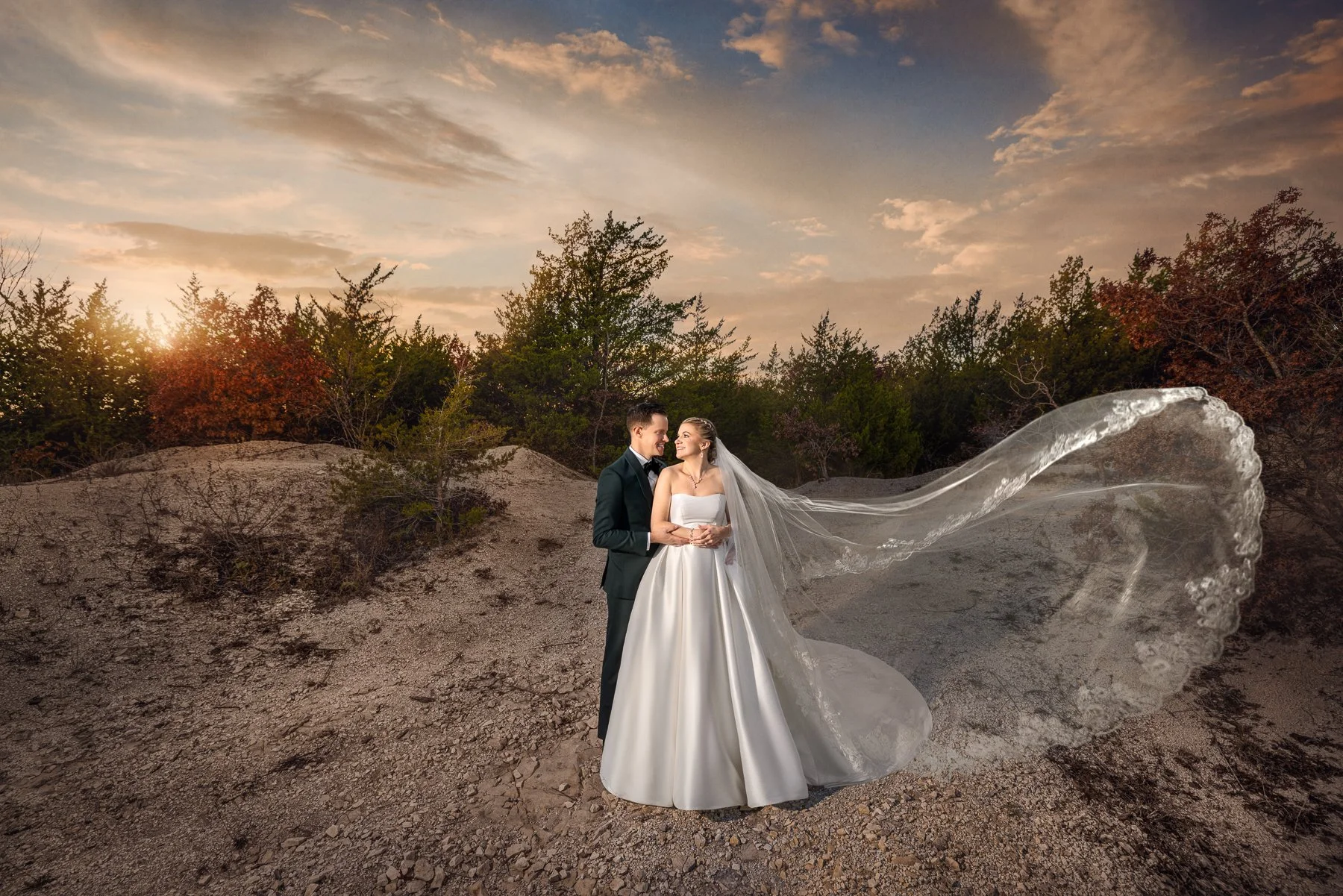
Why Light Matters More Than Almost Anything at an Outdoor Wedding
One of the biggest misconceptions about outdoor wedding photography is that a beautiful venue automatically creates beautiful light.
It doesn't.
The direction of the sun, ceremony time, surrounding trees and buildings, cloud cover and even the season can completely change how the same location photographs.
A ceremony at 2:00 PM may have strong overhead sunlight and deep shadows. A few hours later, that exact same space can become softer, warmer and completely different through the camera.
That's why when we're planning photography for an outdoor wedding in Dallas–Fort Worth, we're not only looking at where the ceremony will happen.
We're looking at when it will happen and where the light will be.
Harsh Texas Sun Isn't a Reason to Panic
Not every wedding can be scheduled around perfect golden-hour light — and it doesn't need to be.
If your outdoor ceremony happens during strong midday or afternoon sunlight, our job is to understand the conditions and photograph them intentionally.
Sometimes that means changing our camera position. Sometimes it means using the environment to find cleaner light. Sometimes it means exposing differently to preserve the sky and atmosphere around you.
And sometimes we simply embrace the fact that it looks like a beautiful sunny Texas wedding day.
The goal isn't to force every part of your wedding to look like sunset.
It's to know how to create consistently as the light changes.
Then We Watch for the Light to Change
Later in the day, everything can shift.
The sun gets lower. Shadows become longer. The temperature of the light changes. Locations that didn't interest us two hours earlier can suddenly become some of the best places to photograph.
That's why we're constantly watching the environment throughout an outdoor wedding.
Because sometimes the difference between a good photograph and one of our favorite photographs of the entire wedding is simply recognizing that the light became incredible — and knowing what to do with it before it's gone.
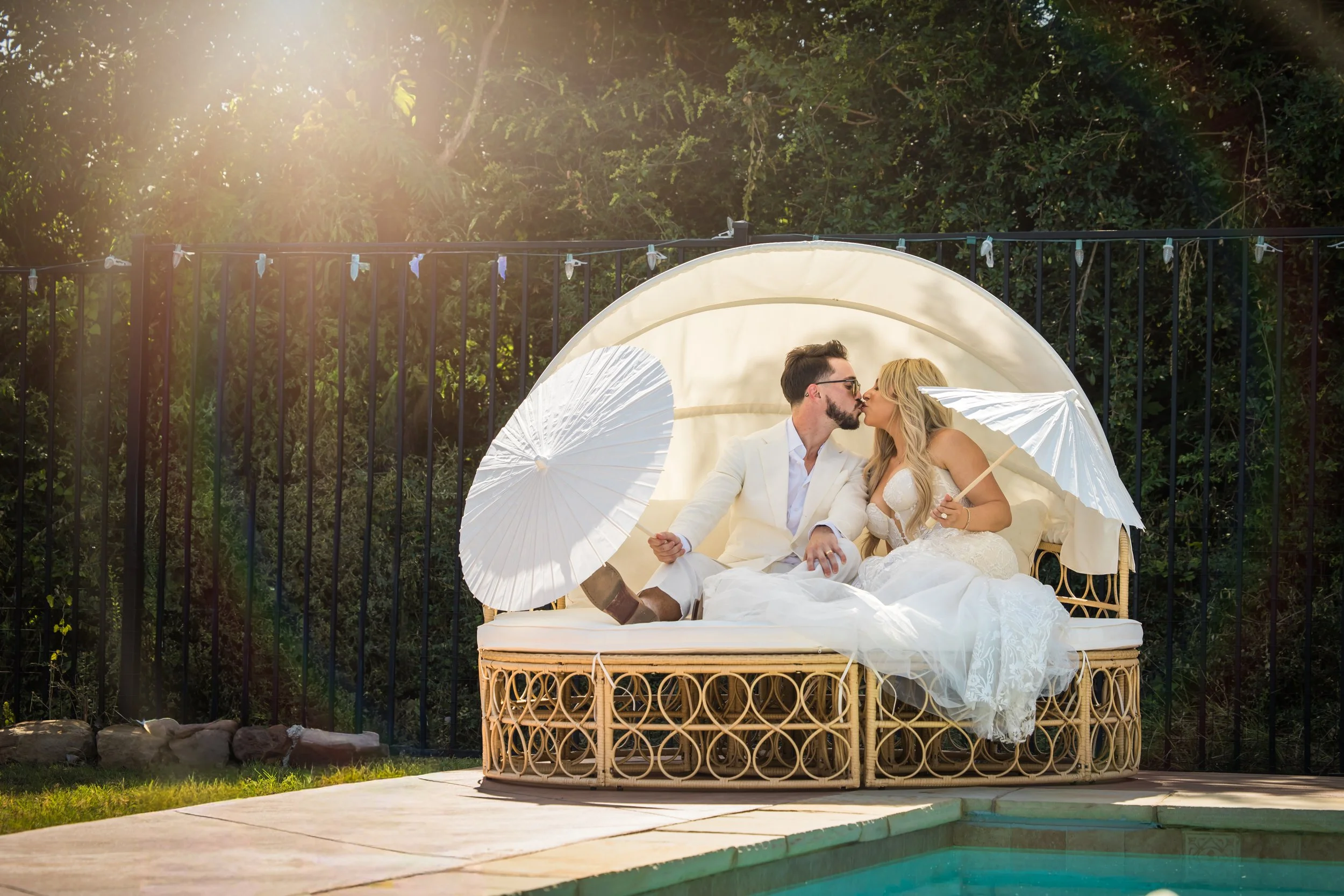
What time Should You have an Outdoor Wedding Ceremony Dallas-Fort Worth
There isn't one perfect ceremony time for every outdoor wedding in Dallas–Fort Worth.
The right time depends on the season, your venue, the direction the ceremony faces, surrounding trees or buildings and what time the sun will set on your wedding date.
But if photography is important to you, there's one thing we always recommend:
Think about the light before the timeline is completely locked.
Don't Choose Your Ceremony Time by the Clock Alone
A 5:00 PM ceremony can have beautiful soft light during one part of the year and strong direct sunlight during another.
That's because sunset in North Texas changes dramatically throughout the year.
The ceremony location matters too.
If you're facing directly toward the afternoon sun, one person may be looking into bright light while the other is facing away from it. Strong side light can create another completely different look.
Trees, buildings and covered ceremony spaces can help but they can also cause areas of sunlight and shadow to move across the ceremony as the sun gets lower.
That's why we prefer looking at the actual venue, ceremony direction and sunset time rather than simply saying, “Have your ceremony at 5:00.”
Give Yourself Time Before Sunset
If your wedding timeline allows it, we love having some portrait time as the sun gets lower.
That doesn't mean your entire wedding needs to stop for an hour-long sunset photo session.
Sometimes we only need a few minutes.
If we see incredible light developing, we may ask you to step outside with us briefly. Those few minutes can create photographs that look completely different from everything we made earlier in the day.
And then you can get right back to your celebration.
Don't Forget About the Texas Heat
Light isn't the only reason ceremony timing matters in Dallas–Fort Worth.
Heat matters too.
During warmer months, an outdoor ceremony in direct afternoon sunlight can feel very different for you and your guests than the same ceremony later in the day.
When possible, consider the comfort of your guests, available shade and how long everyone will be outside especially during the hottest months in North Texas.
Photography should work around your wedding experience, not the other way around.
Our Favorite Approach
Instead of building your entire wedding around photography, we prefer to identify the moments where the available light can give us something special.
We'll create throughout the day regardless of the conditions.
But if your venue, ceremony and timeline give us an opportunity to work with beautiful late-afternoon or sunset light, we're absolutely going to take advantage of it.
Because great outdoor wedding photography isn't about needing perfect weather or a perfect sunset.
It's about knowing what the light is doing — and being ready when it gives us an opportunity.
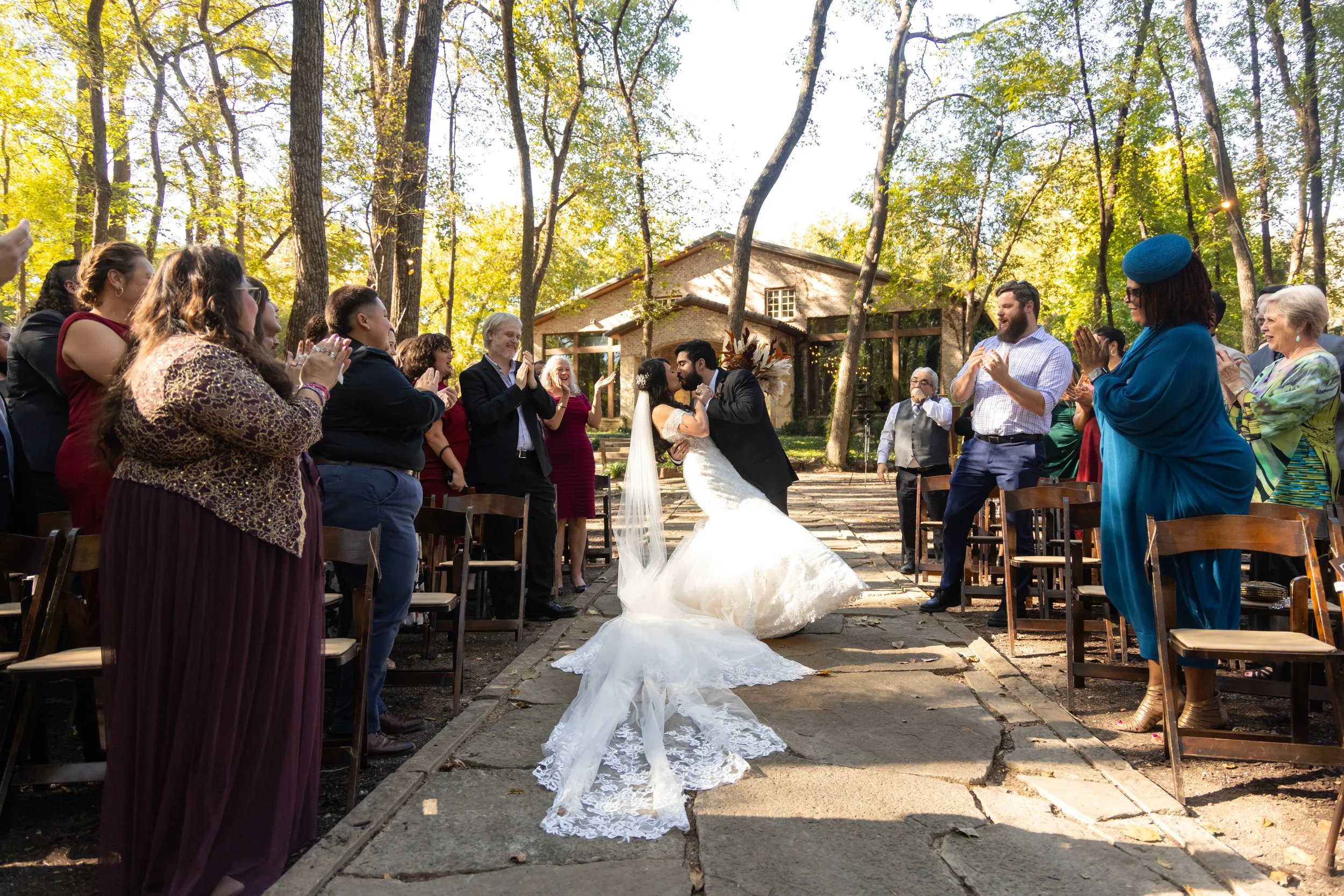
Planning for Texas Weather: What If It Rains?
If you're planning an outdoor wedding in Dallas–Fort Worth, there's one thing we can't control:
Texas weather.
A beautiful forecast can change. Wind can arrive. Clouds can roll in. A quick rain shower can interrupt the timeline — and sometimes the weather changes several times during the same wedding day.
That doesn't mean your photography has to suffer.
Always Know the Backup Plan
When you're considering an outdoor wedding venue, one of the most important questions to ask is what happens if the ceremony can't take place outside.
Is there an indoor ceremony space?
Is there a covered area?
Can the reception space be transformed if necessary?
And just as importantly for photography: where can we create if the weather changes?
A strong rain plan gives everyone options and keeps the wedding day moving without turning every dark cloud into a stressful decision.
Clouds Can Actually Be Beautiful for Photography
Couples sometimes see an overcast sky and immediately think they've lost the beautiful light they imagined.
From a photography perspective, that's not necessarily true.
Clouds can soften harsh sunlight and give us flattering, even light in locations that would photograph completely differently on a bright afternoon.
Instead of worrying about whether the day looks exactly like the forecast you hoped for, we look at the conditions we're actually given and decide how to use them.
And If It Rains, We Keep Creating
Sometimes we wait a few minutes for the rain to pass.
Sometimes we move inside and create something completely different.
And sometimes, when the conditions are right and our couple is ready for it, we use the rain itself as part of the photograph.
That's one of the reasons we're comfortable combining natural light with creative flash.
We're not dependent on one type of light, one location or perfect weather to create.
Your wedding doesn't need perfect conditions. Your photographer needs to know what to do with the conditions you get.
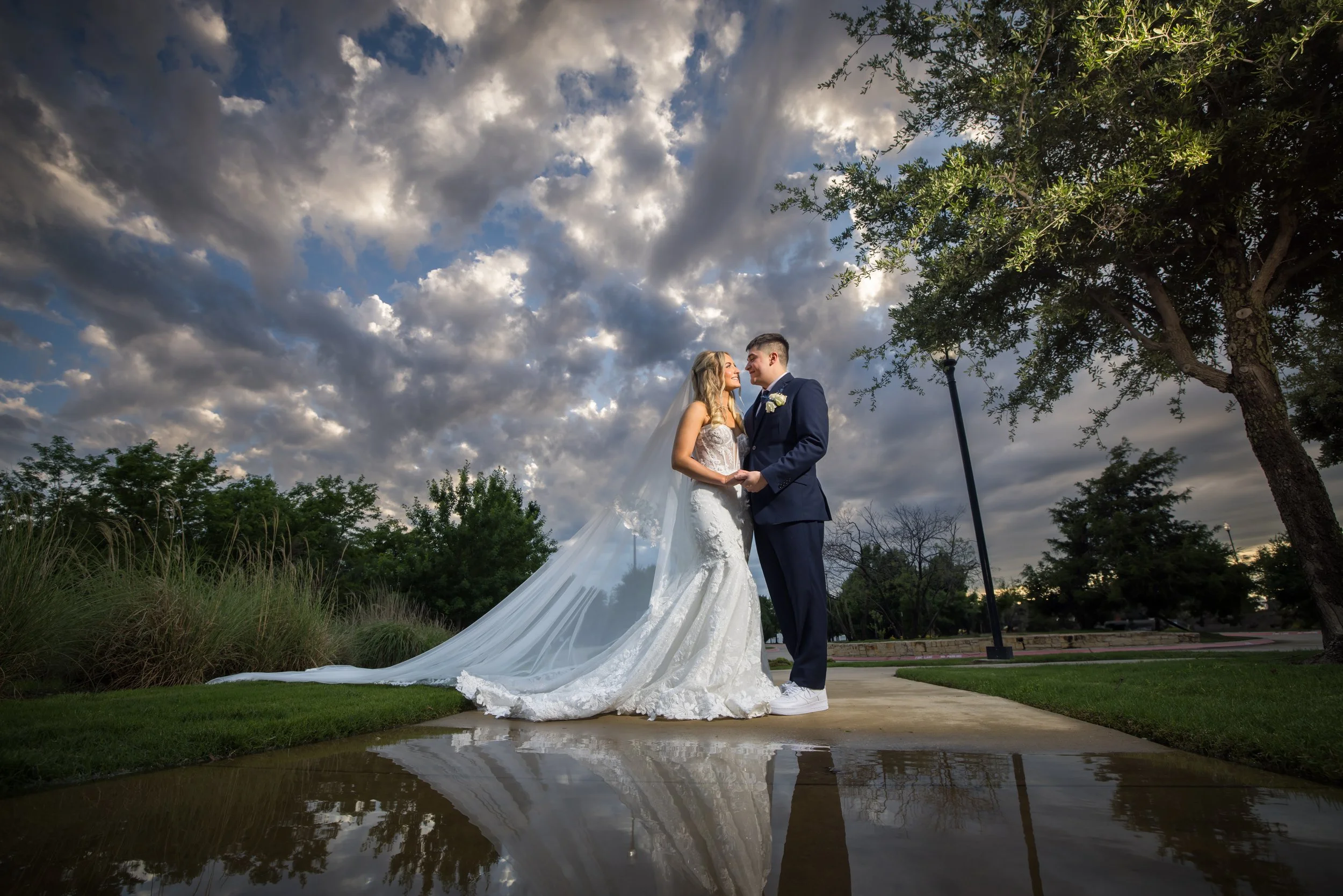
Why Sunset Matters for Outdoor Wedding Photography
There's a reason we pay attention to sunset time when we're planning an outdoor wedding photography timeline.
It's not because every couple needs an hour-long golden-hour portrait session.
It's because the final part of daylight can give us something completely different from everything we've created earlier in the day.
Golden Hour Can Change a Location Completely
As the sun gets lower, the light becomes warmer, shadows become softer and locations that looked ordinary earlier in the afternoon can suddenly come alive.
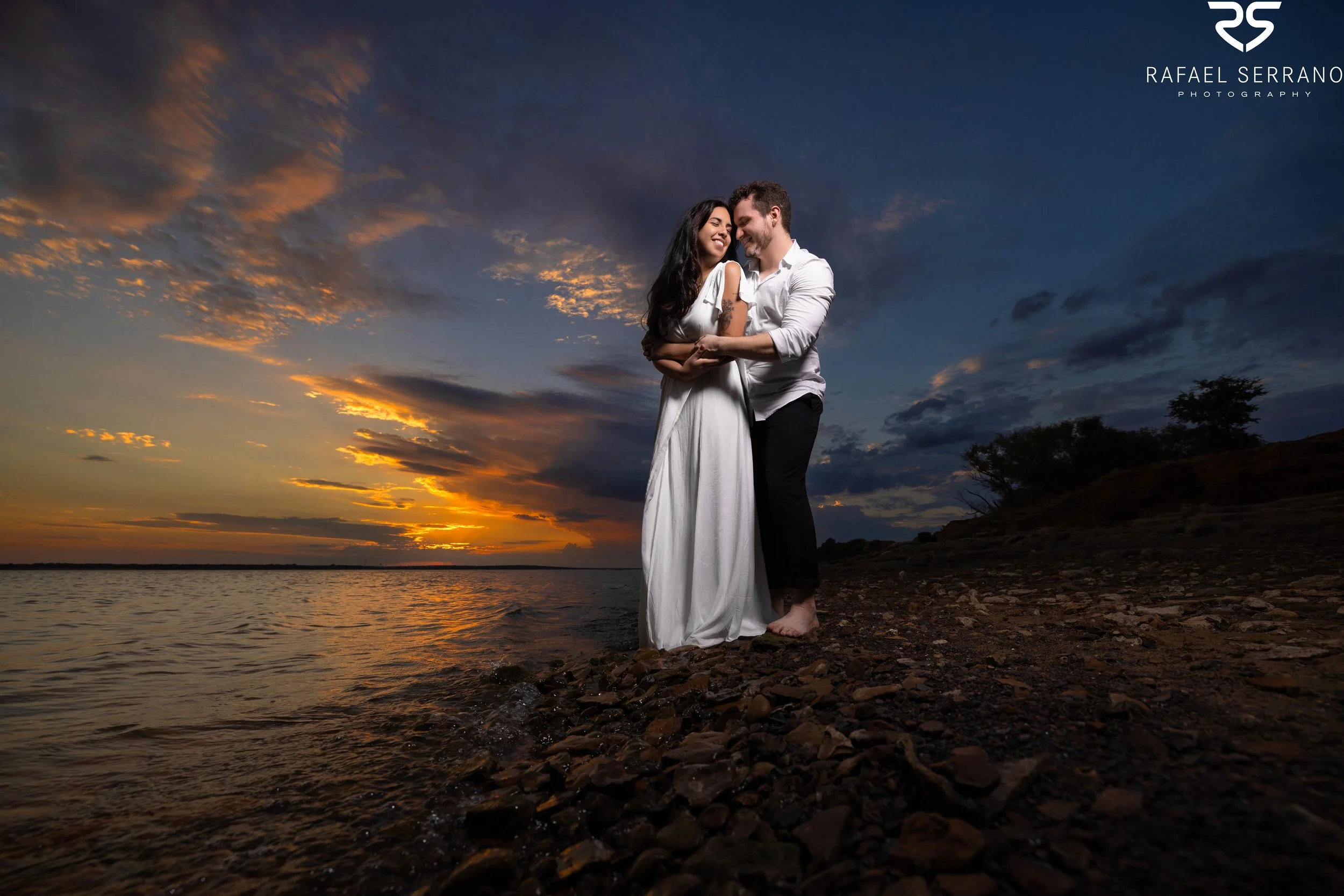
At Dallas–Fort Worth wedding venues with open fields, gardens, trees or expansive grounds, those final minutes of daylight can give us opportunities that simply don't exist at any other point in the day.
And the best part?
We usually don't need very long.
Sometimes 10–15 minutes outside is enough to create an entirely different collection of photographs before you return to your reception.
We Don't Chase the Same Sunset Photo at Every Wedding
This is important to us.
We don't arrive at a wedding with a photograph from another couple that we're trying to recreate.
We watch what's happening.
Maybe the sky becomes incredible.
Maybe sunlight starts coming through the trees.
Maybe there's no dramatic sunset at all, but we find beautiful soft light somewhere else on the property.
The goal isn't to manufacture the same photograph at every venue.
It's to recognize what your wedding day is giving us and create something around you.
That's one of the things we love most about photographing outdoor weddings in Dallas–Fort Worth.
The conditions are always changing — which means the possibilities are always changing too.
What to Look for in an Outdoor Wedding Venue in Dallas–Fort Worth
A beautiful outdoor ceremony space is important but when we're looking at a Dallas–Fort Worth wedding venue from a photography perspective, we're looking beyond the ceremony backdrop.
We're thinking about how the entire property will photograph throughout the day.
If you're still choosing your venue, here are a few things worth paying attention to.
Where Does the Sun Set?
This is one of the first things we notice.
Knowing where the sun will be during your ceremony and where it will eventually set helps us understand how the property may change throughout the day.
A field, garden or courtyard that looks ordinary when you tour it at noon may look completely different during the final hour of daylight.
Is There Variety Without Leaving the Property?
Some of our favorite wedding venues give us several completely different environments within a short walking distance.
Gardens. Architecture. Open fields. Trees. Courtyards. Water. Covered areas. Beautiful interiors.
That variety allows us to create a wedding gallery that doesn't feel like every photograph was taken in the same place.
What Happens if the Weather Changes?
For an outdoor wedding in North Texas, a strong backup plan matters.
Look beyond whether the venue simply has an indoor space.
Ask yourself whether you actually like that indoor space.
If weather forces the ceremony or portraits inside, having beautiful architecture, clean backgrounds, large windows or interesting interior spaces gives us more opportunities to keep creating.
Is There Somewhere to Step Away for Sunset?
You don't need acres of open land to create beautiful sunset wedding photographs.
Sometimes all we need is one open area, a clean horizon or a location where the final light of the day can reach you.
And because those conditions can disappear quickly, having that location close to the reception is a huge advantage.
Think About the Entire Wedding Day
The best outdoor wedding venues aren't necessarily the ones with the biggest property or the most elaborate ceremony space.
From a photography perspective, we love venues that give us options.
Beautiful natural light when it's available. Shade when the Texas sun is strong. Indoor locations when weather changes. Outdoor spaces for portraits. And enough variety to create photographs that continue to feel different as the wedding day unfolds.
That's why venue selection can have such a big impact on the visual story of your wedding.
Outdoor Wedding Venues We've Photographed in Dallas–Fort Worth
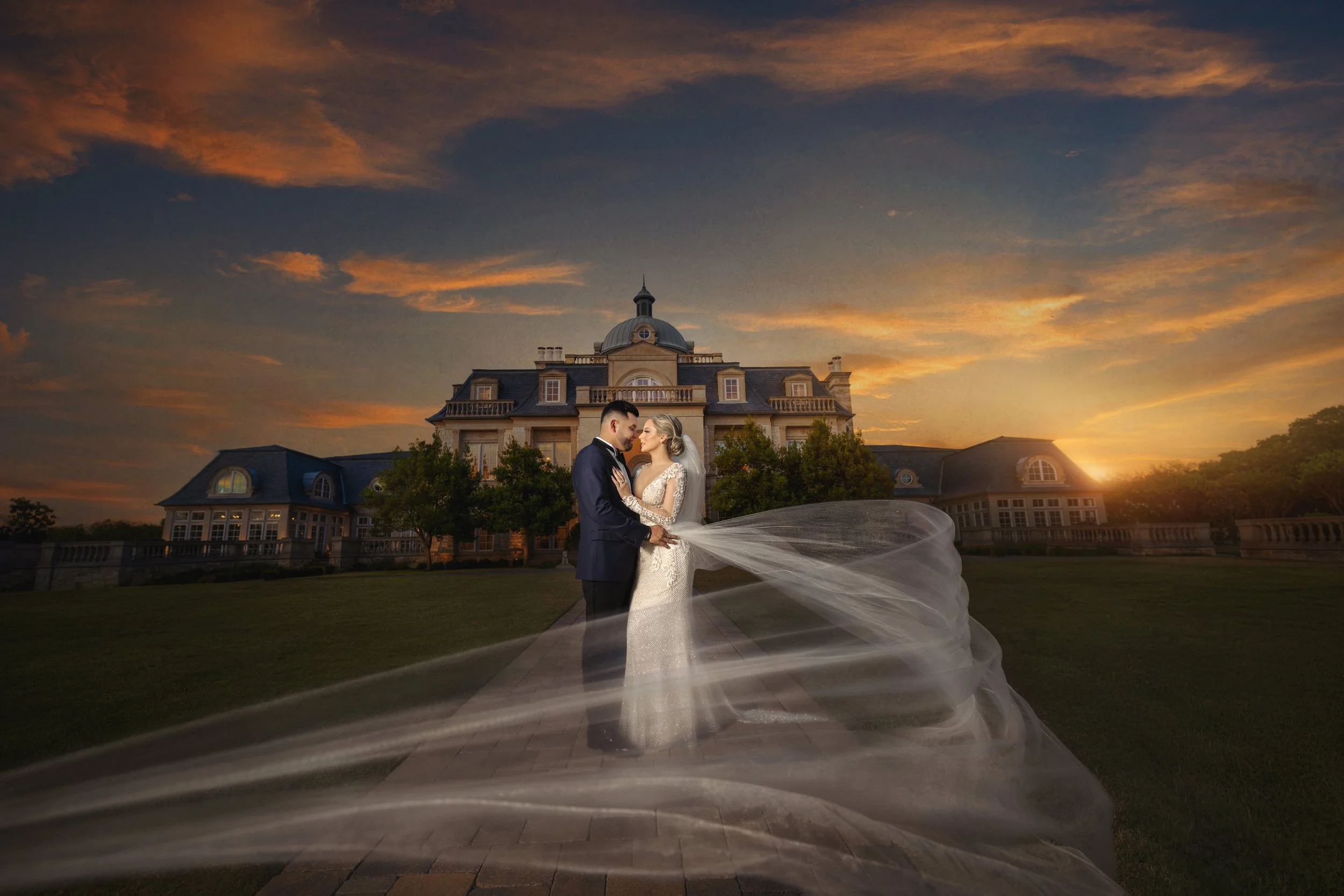
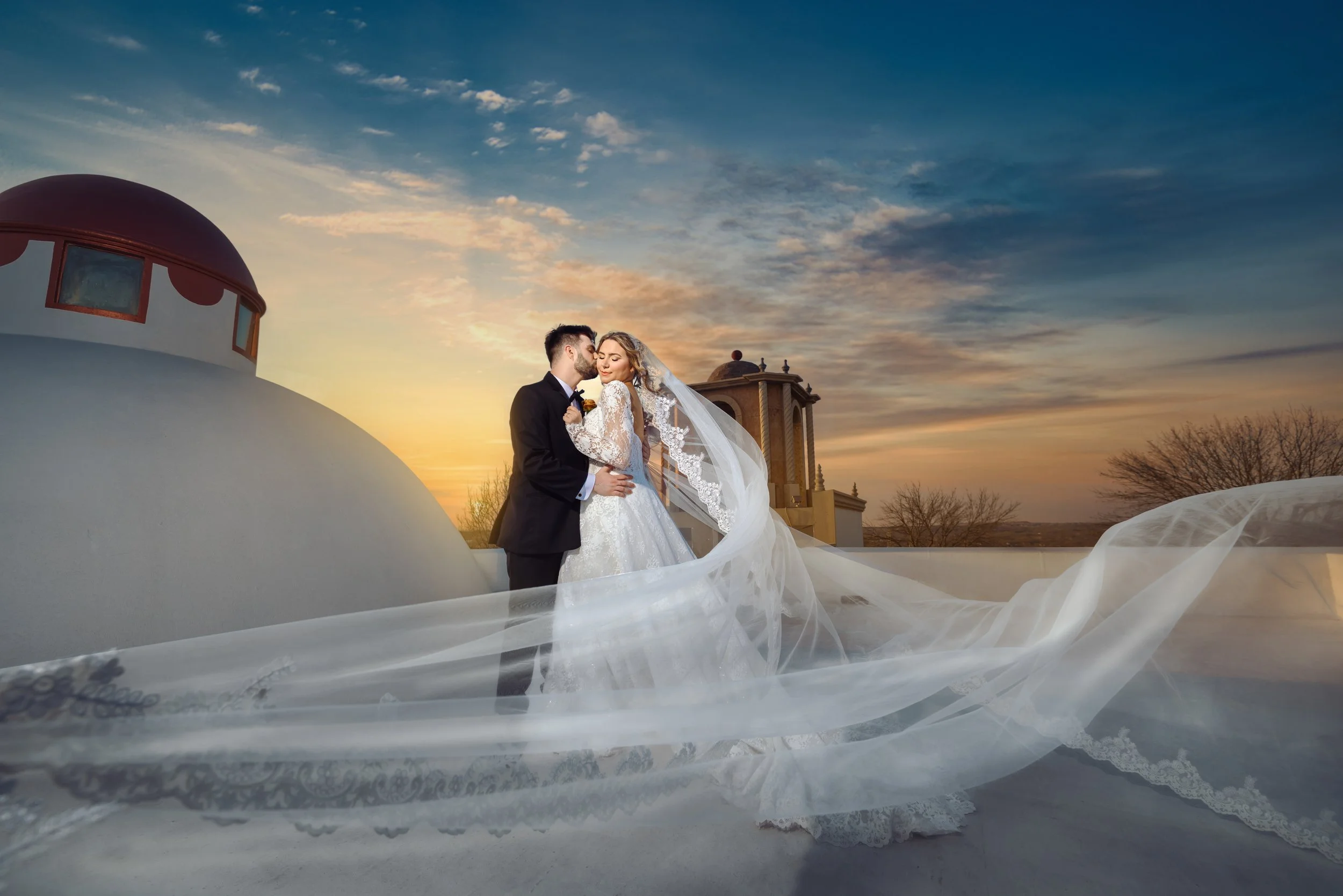
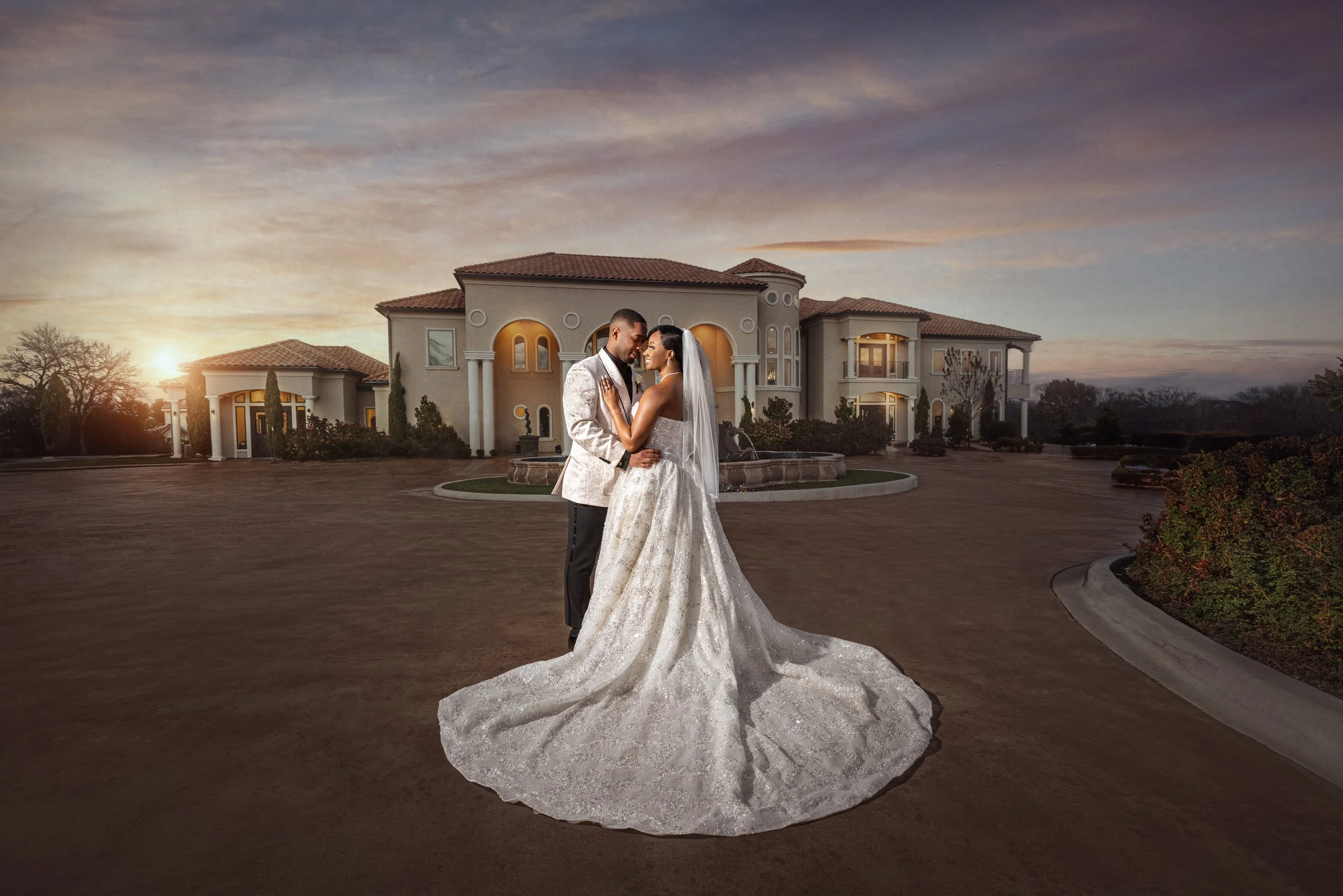
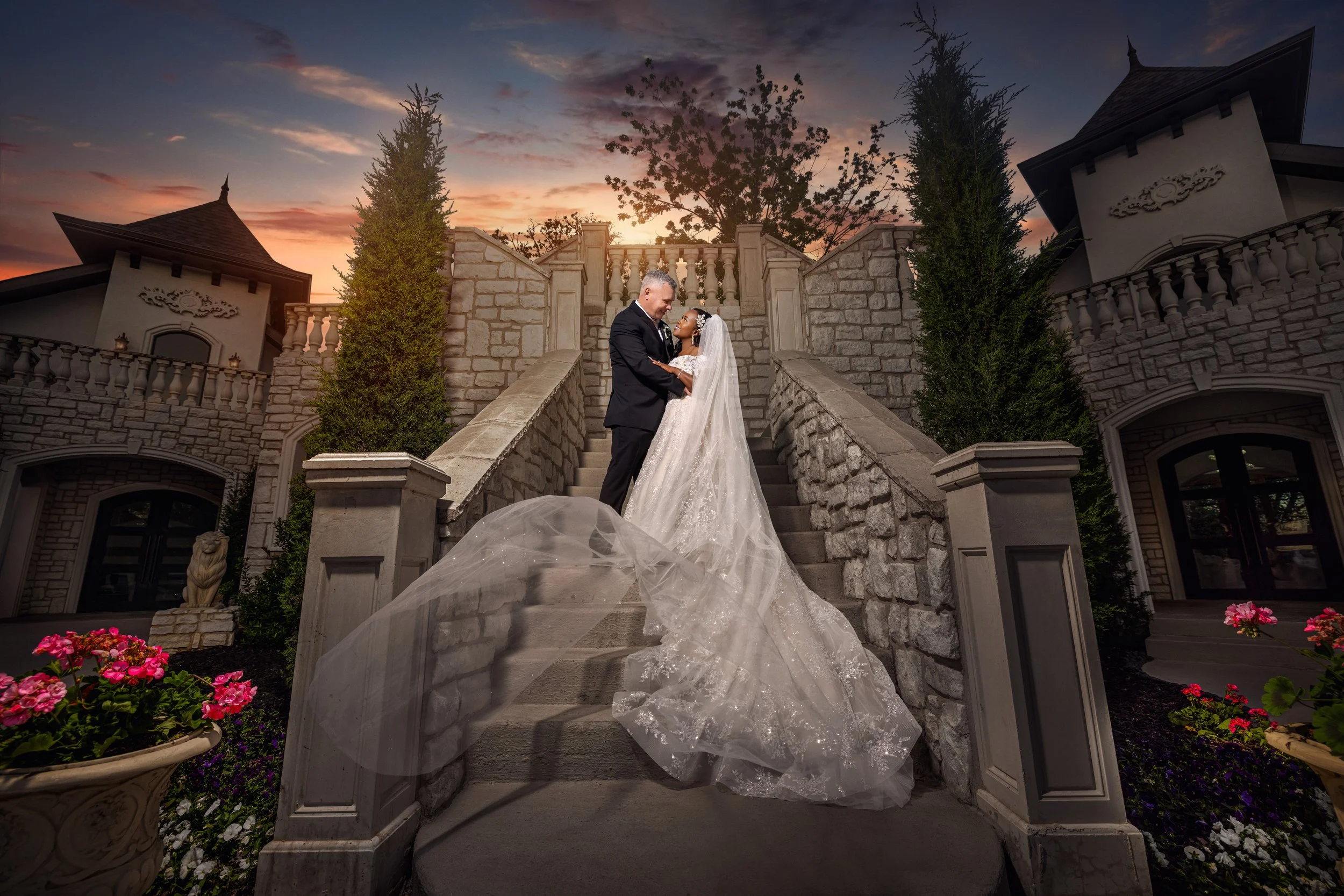
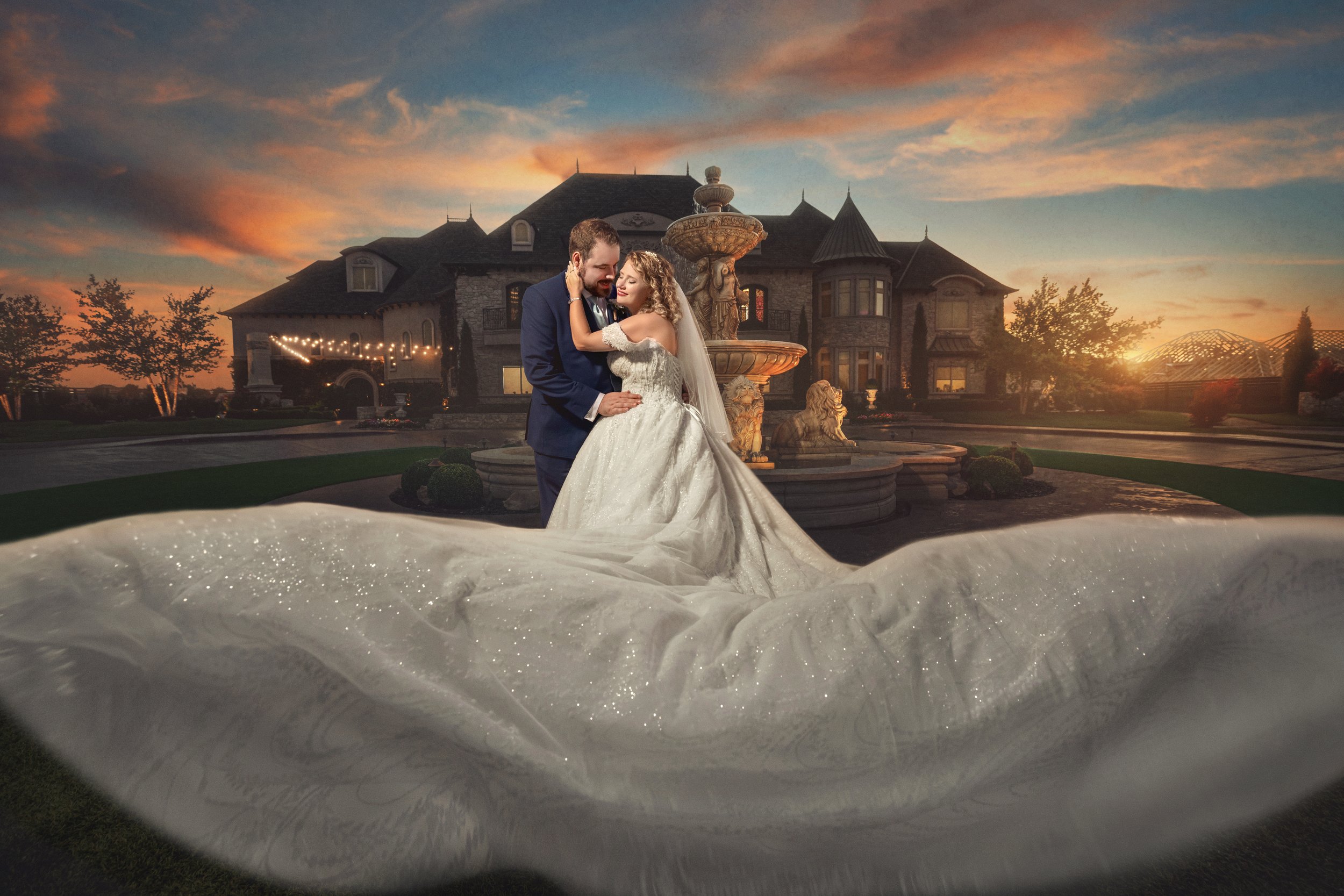
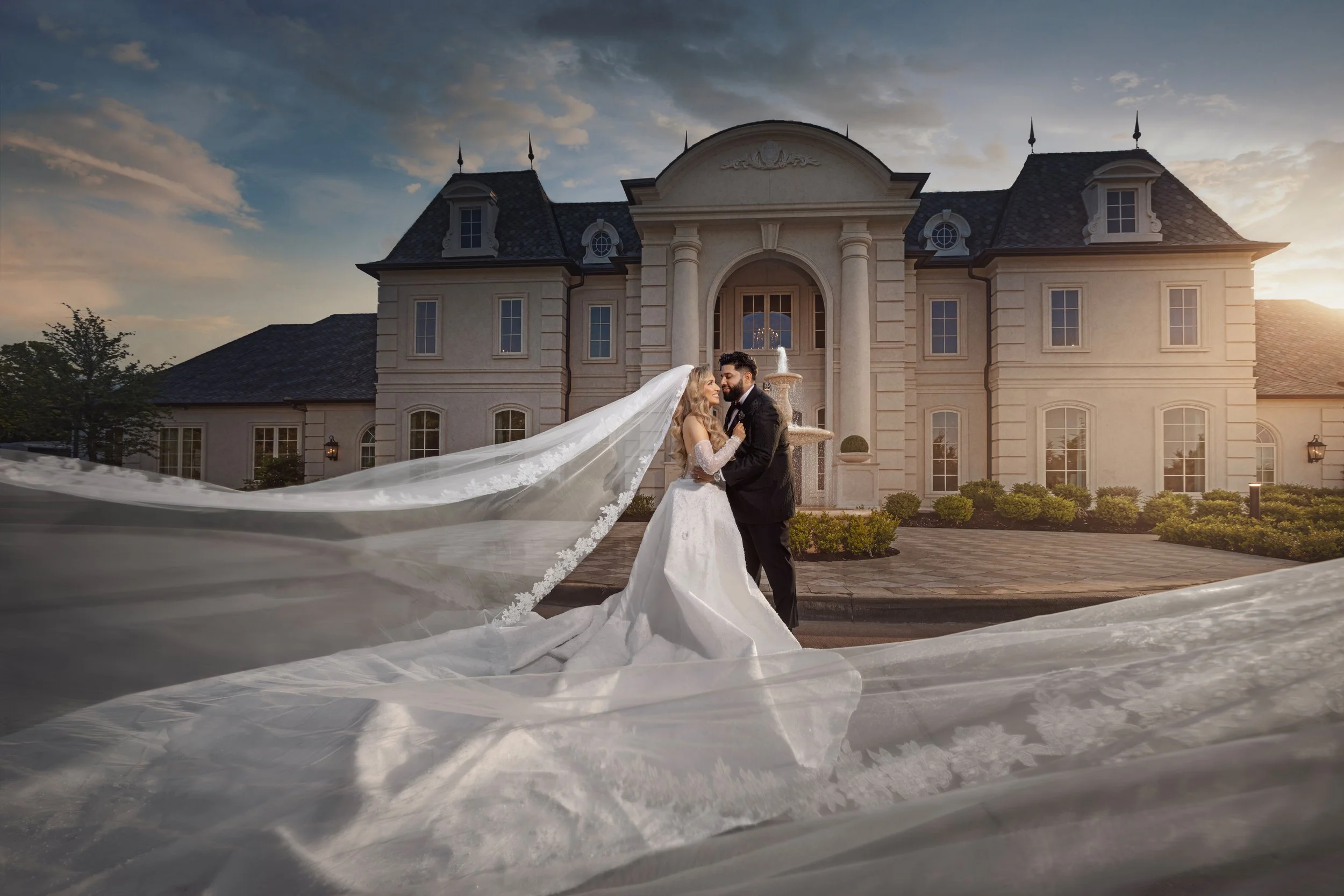
We've photographed outdoor weddings at venues throughout Dallas–Fort Worth, and every property gives us something different to work with.
From European-inspired architecture and manicured gardens to vineyards, open landscapes and tree-covered ceremony spaces, these are a few venues where we've experienced firsthand how the light and environment change throughout a real wedding day.
Natural Light + Creative Flash: Why We Use Both Outdoors
Outdoor wedding photography doesn't mean we're limited to natural light.
We love beautiful natural light when it's available. Soft window light, open shade, golden hour and the final glow before sunset can create incredible photographs.
But the light doesn't always cooperate and sometimes we want to create something more dramatic than what we're seeing with our eyes.
That's where creative lighting comes in.
Natural Light When It's Beautiful
There are moments when the best decision is simply to let the existing light do the work.
During an outdoor ceremony, candid moments or portraits in beautiful soft light, adding something that isn't needed can actually take away from the moment.
Our job is to recognize when the natural light is already giving us exactly what we need.
Creative Flash When We Want Something Different
Other times, we'll introduce our own light.
Creative flash allows us to balance a bright Texas sky, bring detail back into dramatic clouds, illuminate our couple during sunset or transform an ordinary location after dark.
It also gives us more control when the available light isn't ideal.
We're not waiting for perfect light.
We can create it.
One Wedding Day. Completely Different Looks.
That's what we love about combining both approaches.
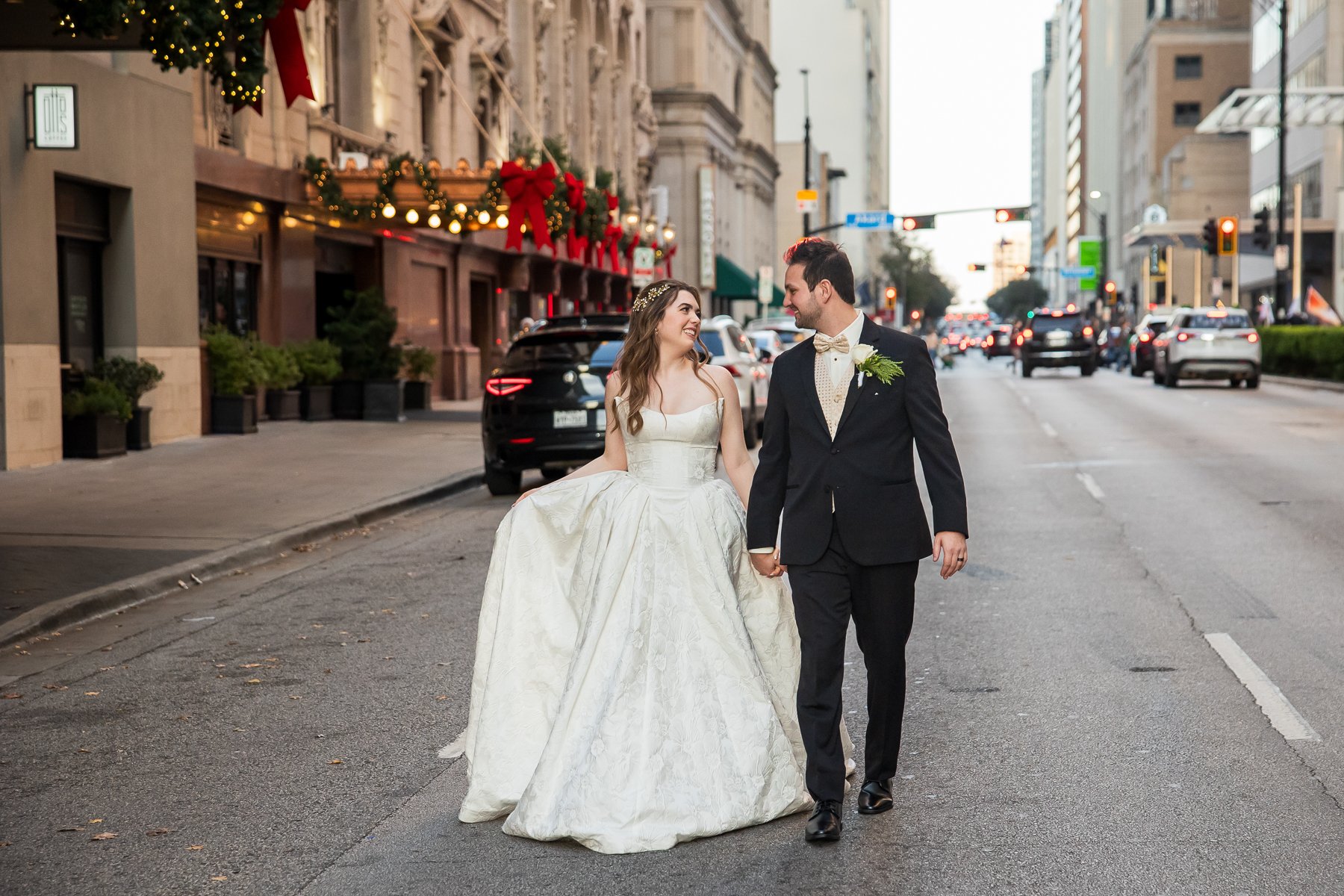
Your ceremony photographs can feel natural and emotional. Your sunset portraits can feel warm and romantic. And later that same evening, we can create something dramatic and cinematic using completely different lighting.
We don't believe your entire wedding gallery should look like it was created with one formula.
The light changes throughout your wedding day.
Our photography should be able to change with it.
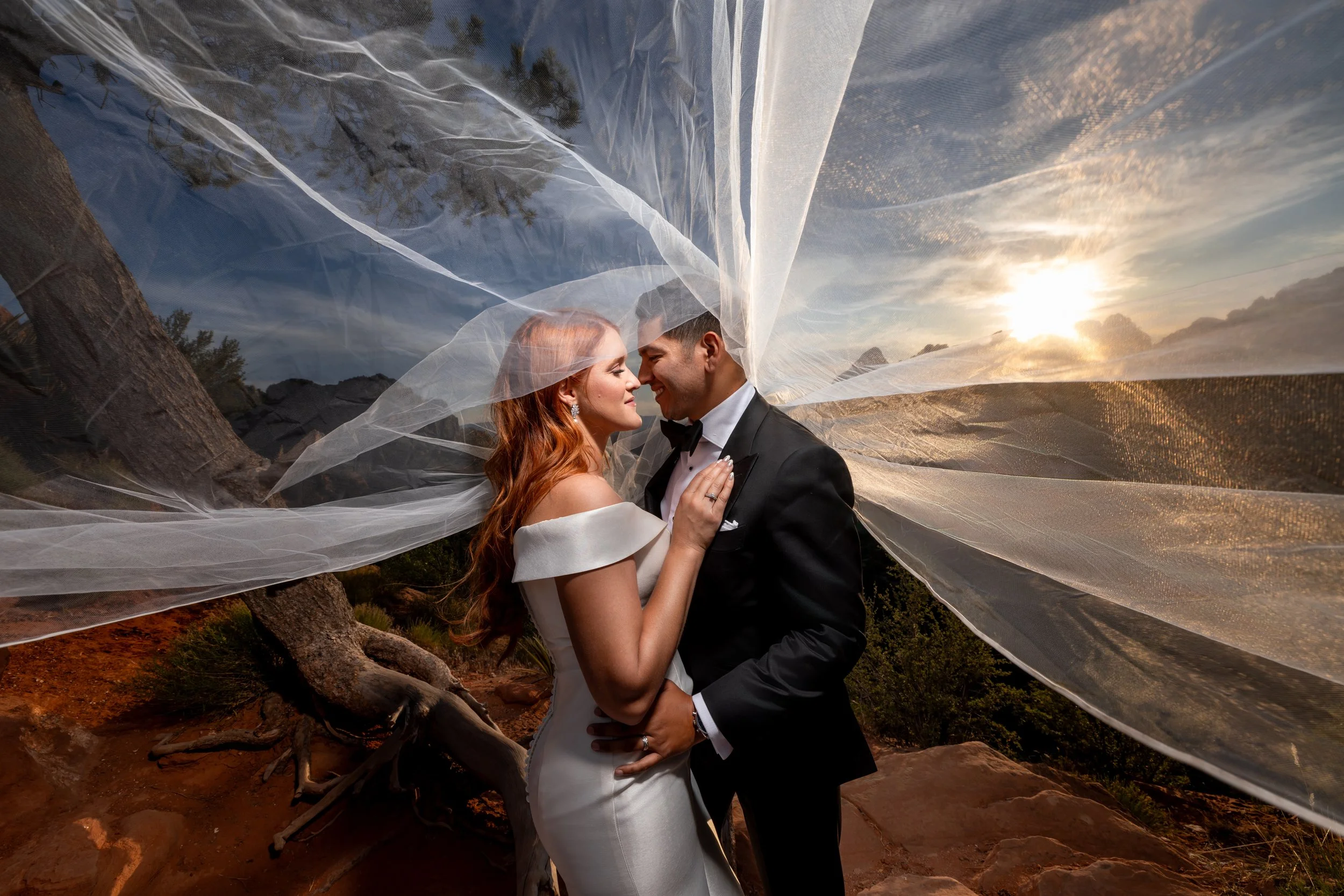
Outdoor Wedding Photography After the Sun Goes Down
Sunset isn't the end of outdoor wedding photography.
For us, it can be the beginning of an entirely different look.
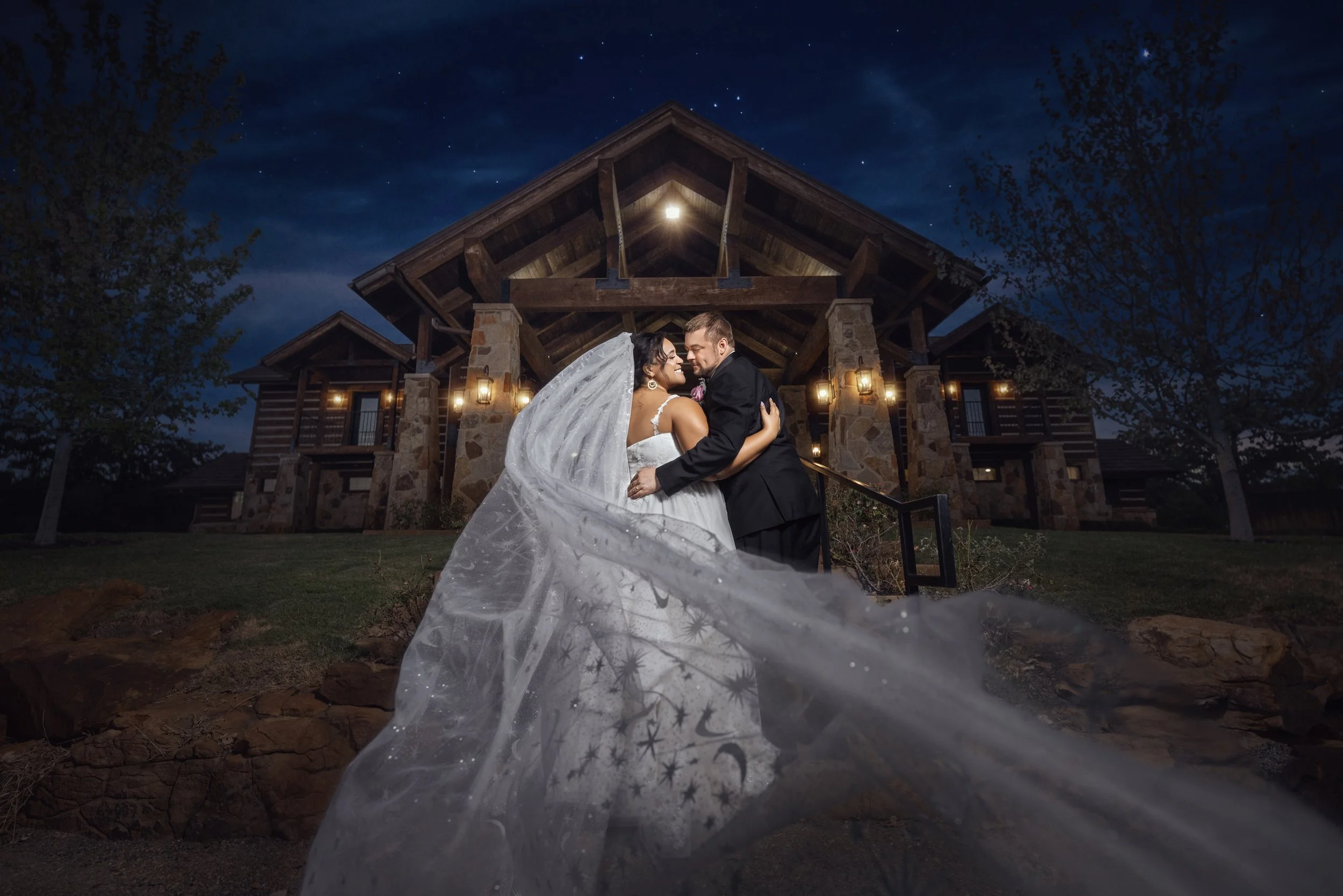
Once the natural light disappears, we're no longer limited by what the sun gives us. We can introduce our own lighting and use the venue, architecture, night sky and surrounding environment to create photographs that feel completely different from anything we made earlier in the day.
Your Venue Can Look Completely Different at Night
A location you've walked past all afternoon can transform once the sun goes down.
Exterior lights turn on. The sky becomes deep blue. Buildings become illuminated. Reflections appear. And areas that didn't immediately catch our attention during daylight can suddenly become incredible places to create.
That's why we're always looking at the venue throughout the entire wedding day not just during portrait time.
You Don't Need Another Long Portrait Session
Just like sunset photographs, nighttime wedding portraits don't need to take you away from your reception for an hour.
If we see an opportunity, we may ask you to step outside with us for a few minutes.
We'll already have an idea of what we want to create, set up the lighting and get you back to your celebration.
A few minutes can be enough to add something completely different to your wedding gallery.
Creating Light Gives Us More Possibilities
Knowing how to work with flash outdoors means we're not dependent on perfect daylight to make photographs we're excited about.
We can use creative lighting to highlight you against the venue, preserve the atmosphere of a blue-hour sky, create movement with a veil or turn an otherwise dark outdoor space into something cinematic.
When the sun goes down, we don't stop looking for photographs. We start looking at the venue differently.
Outdoor Wedding Photography FAQ
Planning an outdoor wedding in Dallas–Fort Worth comes with a few extra questions about light, weather and timing. Here are some of the questions we hear most often from couples planning an outdoor ceremony or reception in North Texas.
-
There isn't one ceremony time that works for every wedding. The best time depends on your wedding date, sunset time, ceremony direction, venue and surrounding landscape.
From a photography perspective, later-afternoon ceremonies can often provide softer light and make it easier to transition into sunset portraits afterward. However, we've photographed outdoor ceremonies in strong afternoon sunlight too.
Before your timeline is finalized, we recommend looking at the actual ceremony location and sunset time rather than choosing a ceremony time based only on the clock.
-
Rain doesn't mean beautiful wedding photography disappears.
We may photograph inside while weather passes, use covered areas around the venue or take advantage of softer light when the rain stops. When conditions allow, rain, dramatic clouds and reflections can even give us opportunities to create photographs we couldn't have made on a perfectly clear day.
The most important thing is choosing a venue with a backup plan and a photographer who is comfortable adapting when conditions change.
-
Absolutely.
We don't expect every ceremony to happen during perfect golden-hour light. Strong Texas sunlight simply requires us to photograph differently.
We pay attention to the direction of the sun, backgrounds, available shade and exposure while positioning ourselves intentionally throughout the ceremony.
Beautiful outdoor wedding photography shouldn't depend on perfect light.
-
Usually much less than couples expect.
When the timeline and venue allow it, even 15-20 minutes can give us enough time to create a completely different set of photographs during golden hour or sunset.
We don't want photography to take you away from your wedding. Our goal is to recognize when the light becomes special, create intentionally and get you back to your celebration.
-
North Texas summers can be extremely warm, so ceremony timing, shade, guest comfort and access to indoor spaces are worth considering when planning an outdoor wedding.
A later ceremony may help with both comfort and photography, depending on your venue and wedding date.
We recommend discussing the outdoor portions of your timeline with your venue and photographer before everything is finalized so the experience works for you and your guests not just for the photographs.
-
Absolutely and some of our most dramatic photographs are created after the natural light disappears.
We use creative flash and off-camera lighting to work with venue architecture, blue-hour skies, exterior lights and nighttime environments.
Your outdoor wedding photography doesn't have to end when golden hour does.
Planning an Outdoor Wedding in Dallas–Fort Worth?
Choosing the right venue, building a photography-friendly timeline and understanding how the light changes throughout the day can make a huge difference in both your experience and your photographs.
If you're still searching for the right location, explore our Luxury Wedding Venues in Dallas–Fort Worth guide, where we share venues we've photographed firsthand along with what makes each one interesting from a photographer's perspective.
Already found your venue?
Take a look through our Dallas wedding photography portfolio to see how we combine real moments, guided posing, natural light and creative lighting throughout an entire wedding day.
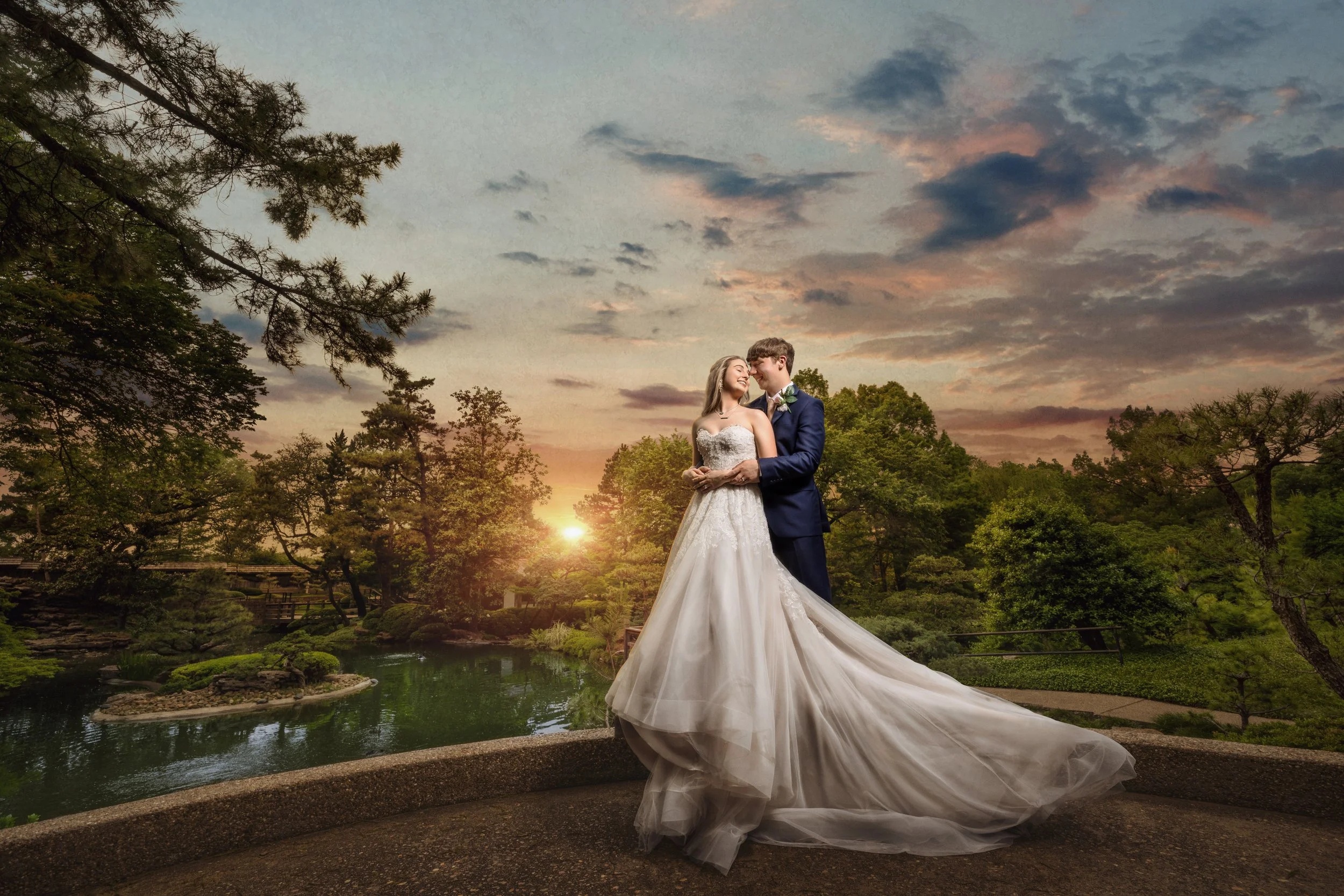
Your Wedding. Your Light. Your Story.
Every outdoor wedding gives us something different.
Different light. Different weather. Different landscapes. Different moments.
Our job isn't to wait for everything to be perfect.
It's to understand what's happening in front of us, guide you when you need direction, let the real moments happen when you don't, and use everything the day gives us to create photographs that feel like your wedding — not somebody else's.
If you're planning an outdoor wedding in Dallas–Fort Worth and want photography that can move from natural moments to cinematic portraits without missing everything happening in between, we'd love to hear what you're planning.
Let's create something EPIC.